

KRA Company Returns Filing in Nyeri: What Every Company Should Know
If you run a company in Nyeri, there’s one tax responsibility you really shouldn’t leave until the last minute: filing your KRA company returns.
And it’s easy to assume that if your company didn’t make much money during the year, or didn’t operate at all, there’s nothing to file.
That’s where things can get tricky.
A registered company generally has tax filing obligations even when business has been slow or the company has made no income. Missing returns can lead to penalties and may cause problems when you later need a KRA Tax Compliance Certificate, apply for a tender, deal with a bank, or carry out other business transactions.
So, if your company is registered in Nyeri, let’s look at what KRA company returns are, when they should be filed, and what you can do if you have missed previous returns.
What Are KRA Company Returns?
KRA company returns are tax returns submitted to the Kenya Revenue Authority (KRA) to report a company’s income and tax position for a particular accounting period.
For companies, the main return is the Income Tax Company Return. It gives KRA information about the company’s income, allowable expenses, taxable profit and tax payable for the relevant year.
The return is normally filed electronically through the KRA iTax system.
Here’s the thing: filing a company return isn’t only about paying tax.
A company can have no tax to pay and still have a return to file.
Who Should File KRA Company Returns in Nyeri
If you have a registered limited company operating in Nyeri, you generally need to keep up with your company’s KRA tax obligations.
This applies whether the company is:
- Actively trading
- Making a profit
- Making a loss
- Temporarily inactive
- Not currently generating income
The exact filing obligations depend on the company’s tax registrations and circumstances.
For example, a company registered for VAT will have additional VAT filing obligations. A company with employees may also have PAYE responsibilities.
So don’t look only at whether the company made money. Look at the tax obligations registered under the company’s KRA PIN.
When Should a Company File Its KRA Returns?
Company income tax returns are generally filed within six months after the end of the company’s accounting period.
For a company whose accounting period ends on 30 June, for example, the return would generally be due by 31 December.
But not every company has the same accounting year.
Some companies have accounting periods ending on different dates, so you should check your company’s tax records and accounting period before assuming a particular filing deadline.
This is one reason it’s better to keep your company records organised throughout the year instead of trying to reconstruct everything when the deadline is approaching.
What Information Is Needed to File Company Returns?
Before filing a company return, you need accurate financial and tax information for the relevant accounting period.
Depending on the company, this may include:
- Sales and other business income
- Business expenses
- Payroll information
- Assets and liabilities
- Withholding tax information
- VAT records, where applicable
- Previous tax payments
- Financial statements
- Supporting accounting records
If your company uses accounting software, keeping the records updated throughout the year makes the return much easier to prepare.
And if the company hasn’t been trading, don’t simply assume you can ignore the return. The appropriate filing treatment should be checked based on the company’s tax obligations.
What Happens If a Company Doesn’t File Its KRA Returns?
This is where problems can start.
A company that fails to file required returns on time may be exposed to penalties and other compliance issues.
You may also encounter difficulties when applying for a KRA Tax Compliance Certificate.
For example, imagine you’ve been running a company in Nyeri for several years but haven’t filed some of its tax returns. Then you suddenly find a tender opportunity and need a current compliance certificate.
That’s when the old filing issues can become a problem.
Instead of waiting until you urgently need a certificate, it’s better to check your company’s KRA status early.
What If the Company Has Never Made Any Income?
This is a common question from company owners.
“My company hasn’t made any money. Do I still need to file?”
In many cases, yes, the company may still have a filing obligation.
A company being inactive or having no income doesn’t automatically mean that all KRA obligations disappear.
The correct treatment depends on the company’s tax obligations and circumstances. If the company has been inactive for a long period, it may also be worth reviewing whether its KRA obligations are still appropriate.
Don’t just stop filing because the business isn’t operating.
That’s how companies end up with years of unresolved tax records.
What About a Dormant Company?
If you registered a company but never really started operating it, you may consider it a dormant company.
But being dormant doesn’t automatically remove the company’s obligations with KRA.
If you’ve got an inactive company sitting on your KRA iTax account, it’s worth checking its filing status and tax obligations.
If you no longer intend to use the company, you can also explore the appropriate process for dealing with the company rather than allowing compliance problems to accumulate year after year.
How to Check Your KRA Company Returns Filing status in Nyeri
You can check your company’s tax information through the KRA iTax portal.
You’ll need access to the company’s KRA PIN and iTax account.
Once logged in, review the company’s tax obligations and filing history. Look for any returns that are marked as outstanding.
It’s also a good idea to check the company’s tax ledger to see whether there are outstanding balances, penalties or other issues.
If you’re not sure what something on the account means, don’t guess. A small error in your records can become more complicated if it’s left unresolved.
KRA Company Returns Filing in Nyeri
You don’t necessarily need to visit a KRA office in Nyeri to file your company returns.
The process is done online through iTax.
Generally, you’ll need to:
- Log into the company’s KRA iTax account.
- Select the relevant income tax return.
- Enter the company’s financial information for the applicable period.
- Complete the required sections of the return.
- Submit the return electronically.
- Save the acknowledgement or submission receipt for your records.
The actual information required will depend on the company’s circumstances and tax obligations.
If the company has proper accounting records, the process is much easier.
What If Your Company Has Missed Several Years of Returns?
Don’t panic.
This is actually quite common among small companies, especially companies that were registered but never became active.
The important thing is to find out exactly what is outstanding.
Start by checking:
Which years are missing?
You need to know the specific tax periods for which returns haven’t been filed.
Are there penalties or outstanding taxes?
Check the company’s iTax ledger to establish whether KRA has raised any liabilities.
Was the company actually operating during those years?
This matters because the information required for an active company can be very different from that of a company that was dormant.
Are the registered tax obligations correct?
A company may have tax obligations that no longer reflect its current activities. These should be reviewed and addressed through the appropriate KRA process.
Once you understand the problem, you can work through the outstanding returns and any related liabilities.
KRA Company Returns and Tax Compliance Certificates
There’s a close connection between keeping your company returns up to date and obtaining a KRA Tax Compliance Certificate.
If you’re planning to apply for a compliance certificate in Nyeri, it’s worth checking your company’s tax records first.
Missing company returns can contribute to compliance problems, along with outstanding tax liabilities and other issues.
So if you’re preparing to bid for a tender or need a compliance certificate for another business purpose, don’t wait until the last day.
Check your KRA account early.

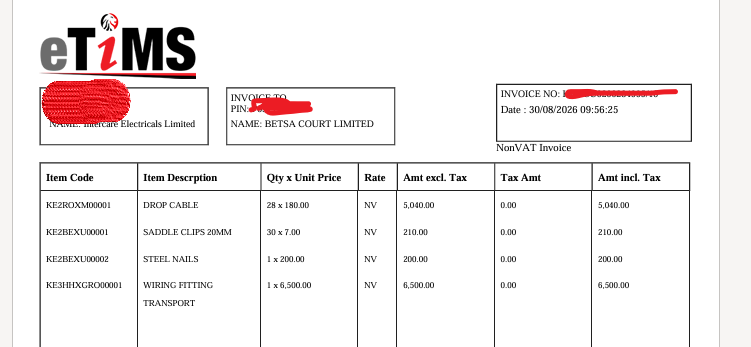
What About eTIMS?
If your company is carrying out business activities that fall under applicable eTIMS requirements, you also need to pay attention to your eTIMS compliance.
Remember, filing your annual company income tax return and complying with eTIMS are not the same thing.
They are separate tax compliance responsibilities.
A company can therefore have its annual return filed while still having other compliance matters that need attention.
If you’re unsure whether eTIMS applies to your company or how your records should be handled, it’s better to get clarification before filing.
Need Help With KRA Company Returns Filing in Nyeri
If you’re a company owner in Nyeri and you’re behind on your KRA returns, you don’t necessarily need to figure everything out by yourself.
At Bzinex, we can assist businesses with KRA-related services, including company return filing, tax compliance checks, eTIMS assistance and reviewing outstanding tax issues. You can call us or Whatsapp +254 797 532 345 now.
ALSO READ:
How to File KRA Returns Online in Kenya
KRA Tax Compliance Certificate: Requirements and Application in Kenya
KRA Nil Returns: Who Should File and How
KRA eTIMS Expert in Karatina: eTIMS Registration, Setup and Compliance
KRA Tax Filing Services in Karatina: Get Your Returns Filed CorrectlyCategoriesCompliance, KRATagshow to get KRA compliance certificate Nyeri, KRA compliance help Nyeri, KRA tax compliance certificate Nyeri, KRA TCC requirements Nyeri, tax compliance certificate Nyeri, TCC application Nyeri
KRA eTIMS Expert in Nyeri: Get Help Setting Up and Using eTIMS